
University Towers(UT) is an apartment complex where the package management system of it is far from meeting residents’ expectation.
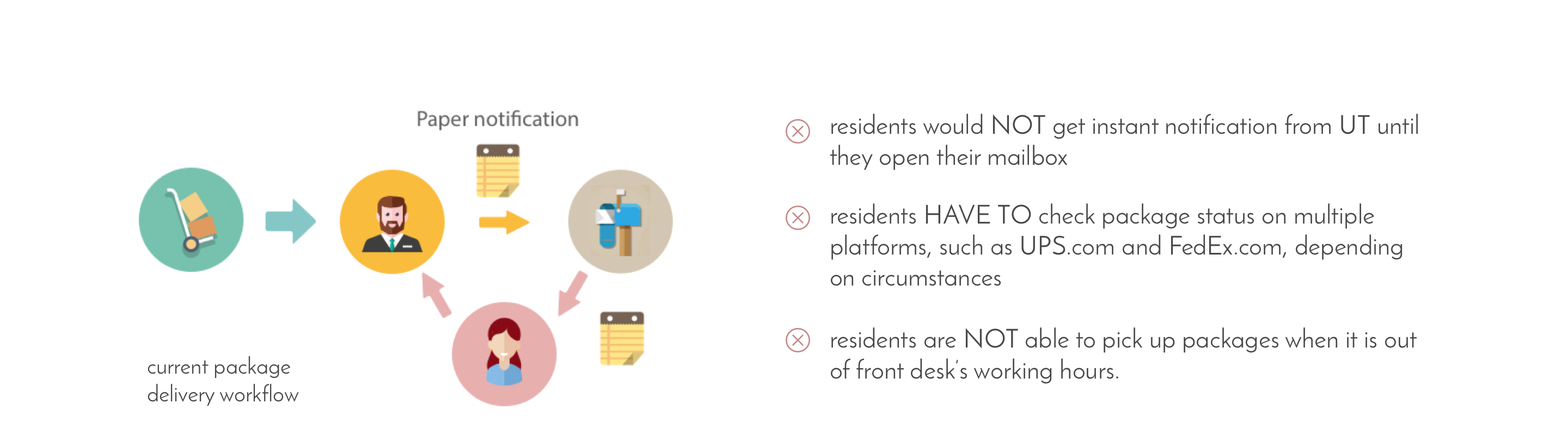
Currently, the coming packages will firstly be signed by UT staffs and temporarily stored in a warehouse. Then a piece of paper notification will be put into the corresponding mailbox. As residents see the notification, they can go to the front desk picking up packages.
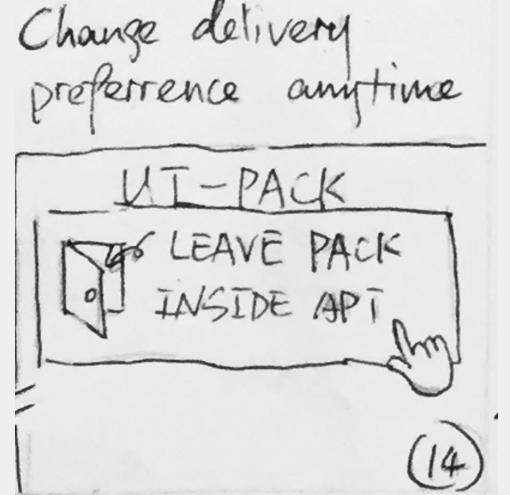
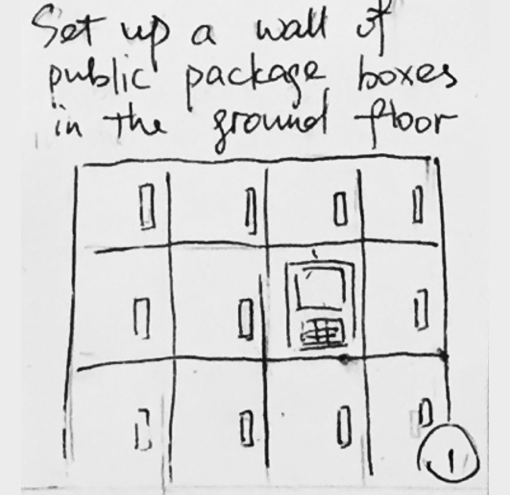
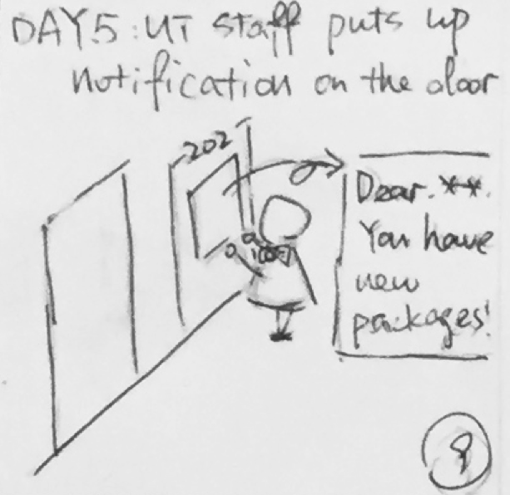
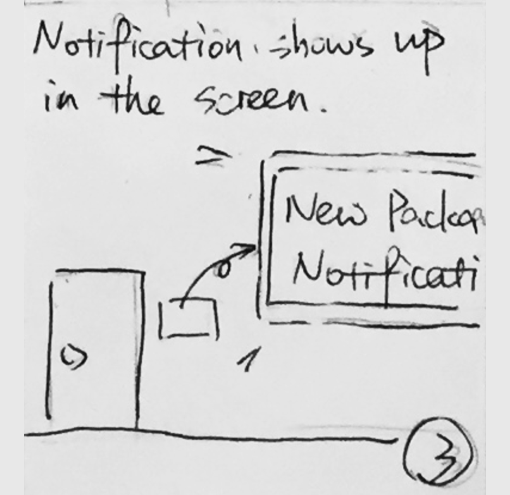
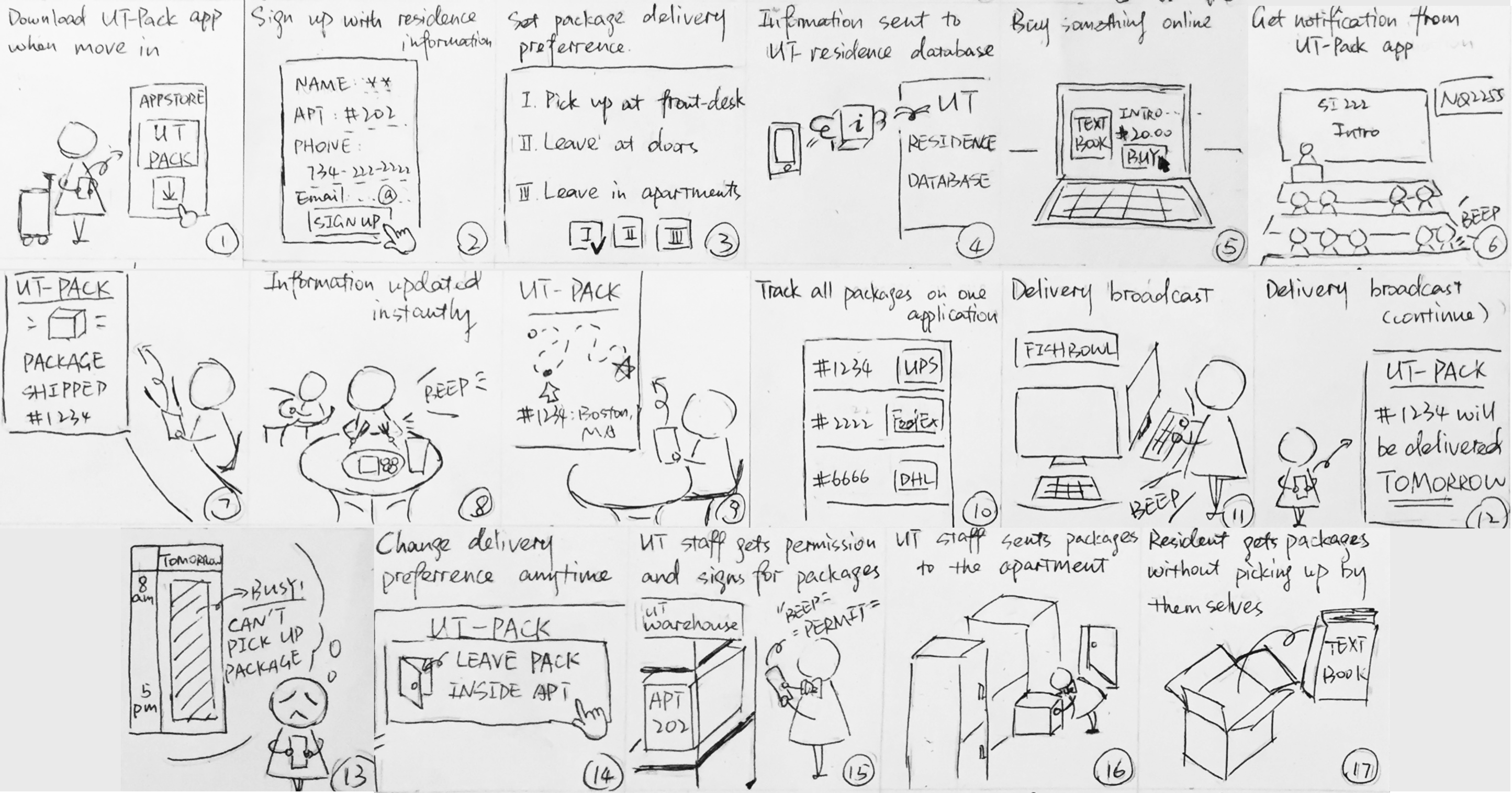
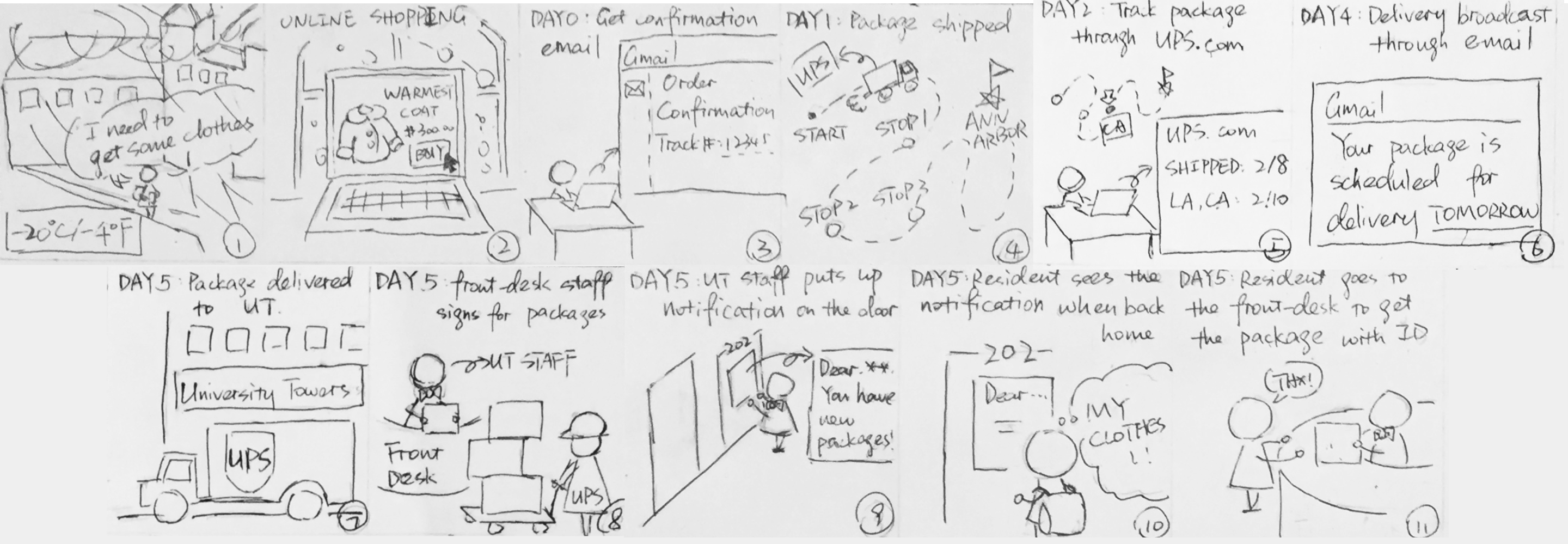
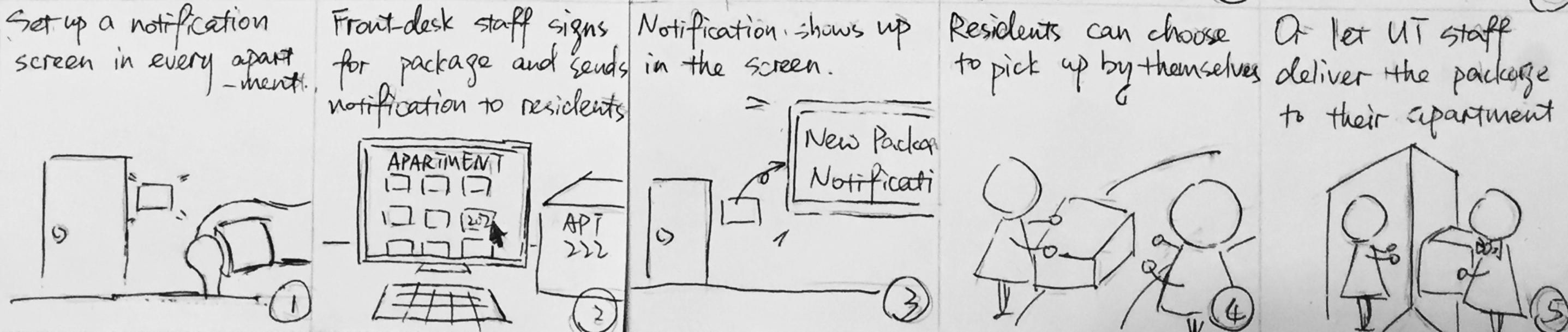
To explore approaches as diverse as possible, I considered different types of technology or infrastructure to leverage, and different strategies that I could embody in the system. In this case, I came up with 4 major approaches and sketched them out, then presented to potential users to ask for feedback and thoughts.
technology-based
technology-based
labor-based
integration of tech and labor

instant notification
flexible settings
accessible and convenient
easy to manage
instant notification

high cost
collaboration required
limited space
cost saving
no learning curve
heavy labor request
inefficient
easy to manage
accessible
cost & time consuming
inaccurate
Based on analysis above, users’ comments as well as the required time and effort by this 3-month project, I decided to design a mobile application as the solution.
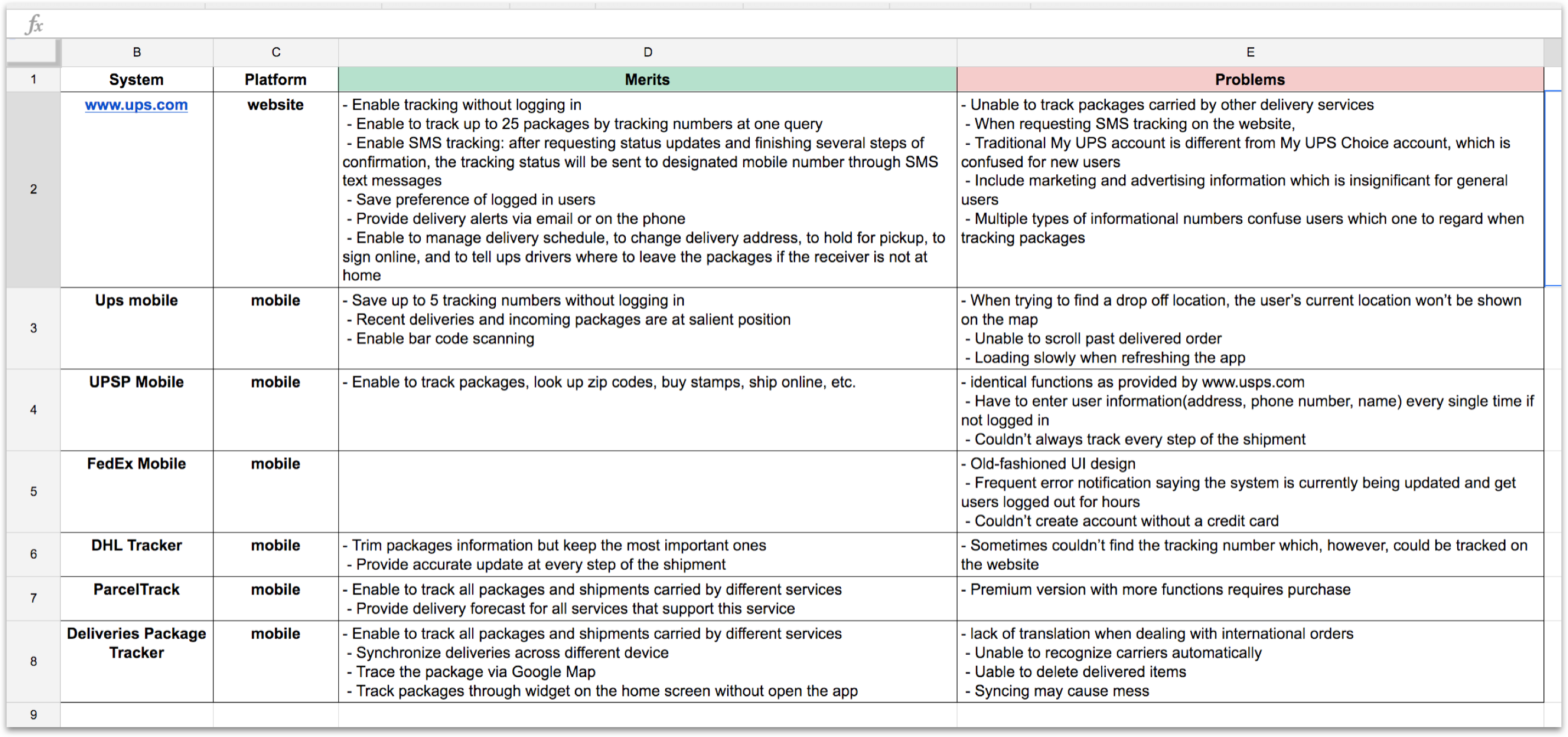
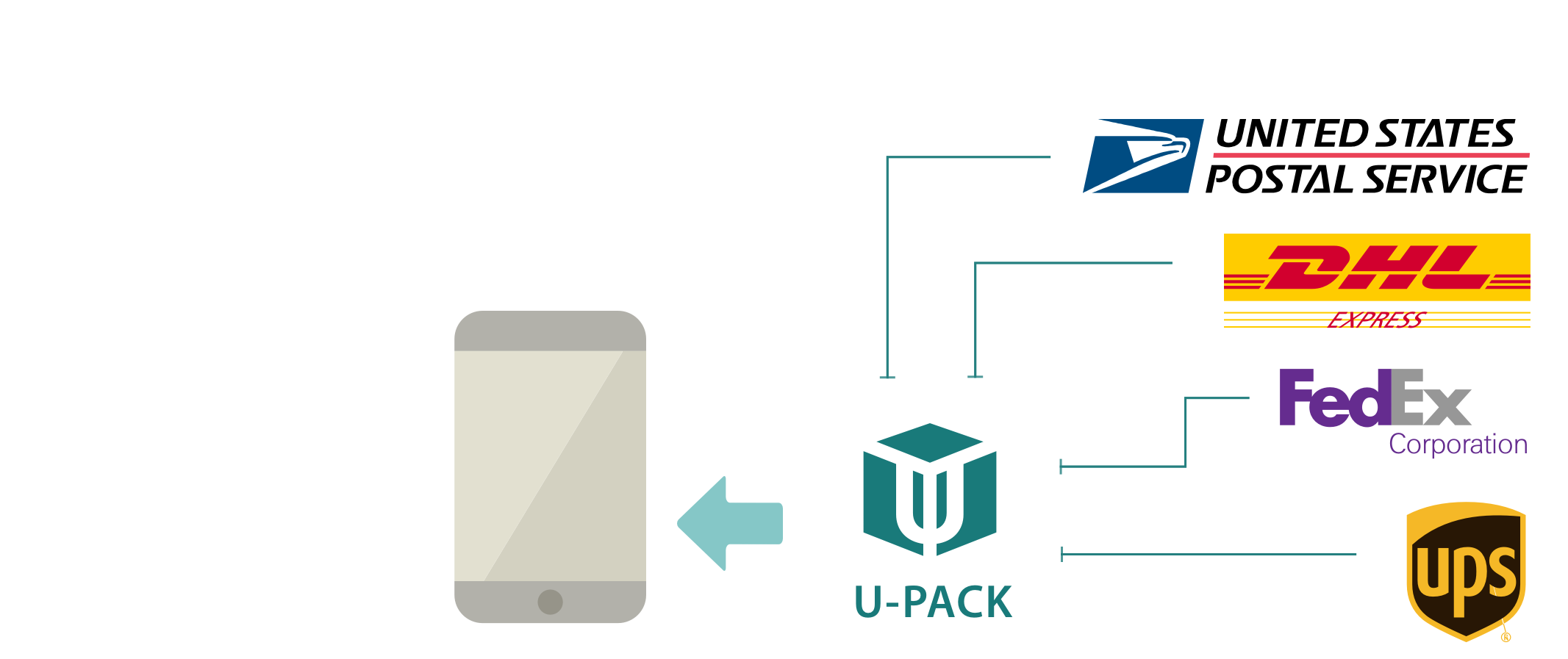
Websites and mobile applications of mainstream delivery services share most features. The most primary advantage is that they provide integrated platforms of rich functionality, consisting of multiple tracking methods: by tracking numbers, shipment reference, bar codes etc., and other information such as creating shipment and branding advertise. The disadvantage,at the same time, is distinct: none of them provides tracking services of packages carried by other delivery services. On contrast, applications like PacelTrack aims at providing cross-services packages tracking service, but lack of preference setting function to choose how the packages will be delivered.
In one word, there is no integration of unified package tracking and community-based delivery preference setting.
Ideally, every current UT resident is my target user. Though most of UT residents are students or families of University of Michigan who have some characteristics and background information in common, they could have a wide range of user needs, motivations, skill levels and so forth. In this case, I conducted interviews with 5 UT residents, who are illustrative of the diverse group. Then I created personas to reflect their behavior and attitude towards package management issue. To maximize the diversity, I developed 3 user personas and 1 non-user persona.
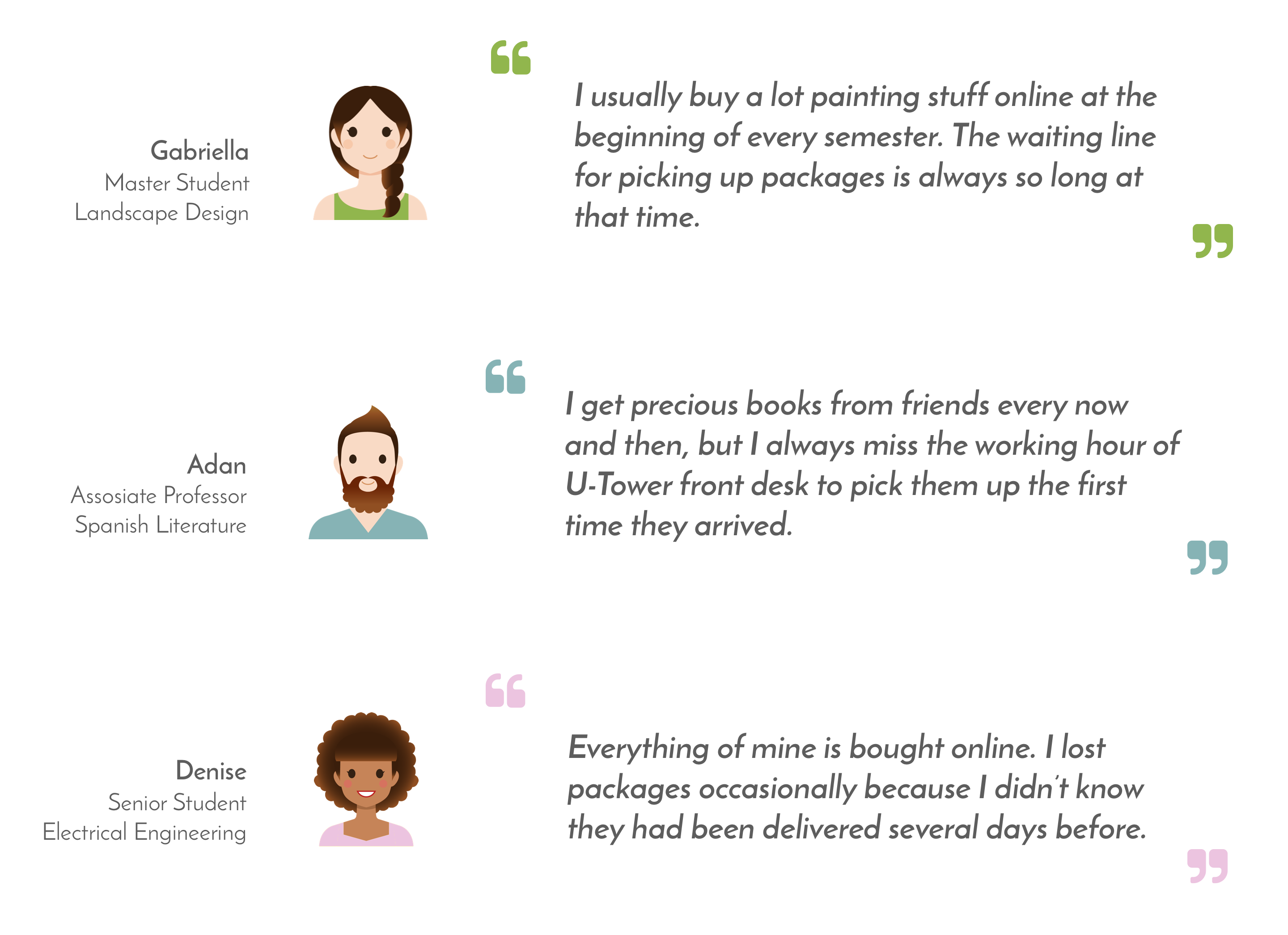
Despite of diverse behavior towards package management issue, unfixed and tight schedule is the common ground.
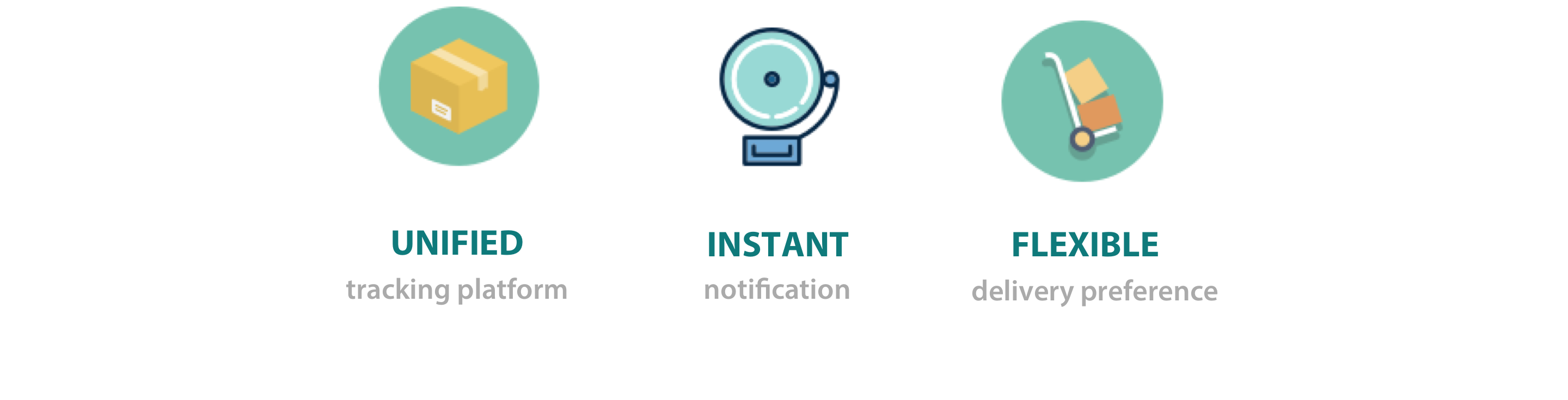
Leveraging existing residence information and customizating the app for UT residents can best improve the usability, at the same time differentiate it from other competitors. According to previous research results, U-Pack should enable users to: track packages on a unified platform no matter which delivery service is used; get delivery broadcast and instant notification as long as packages are ready to pick up; set their package delivery preference;
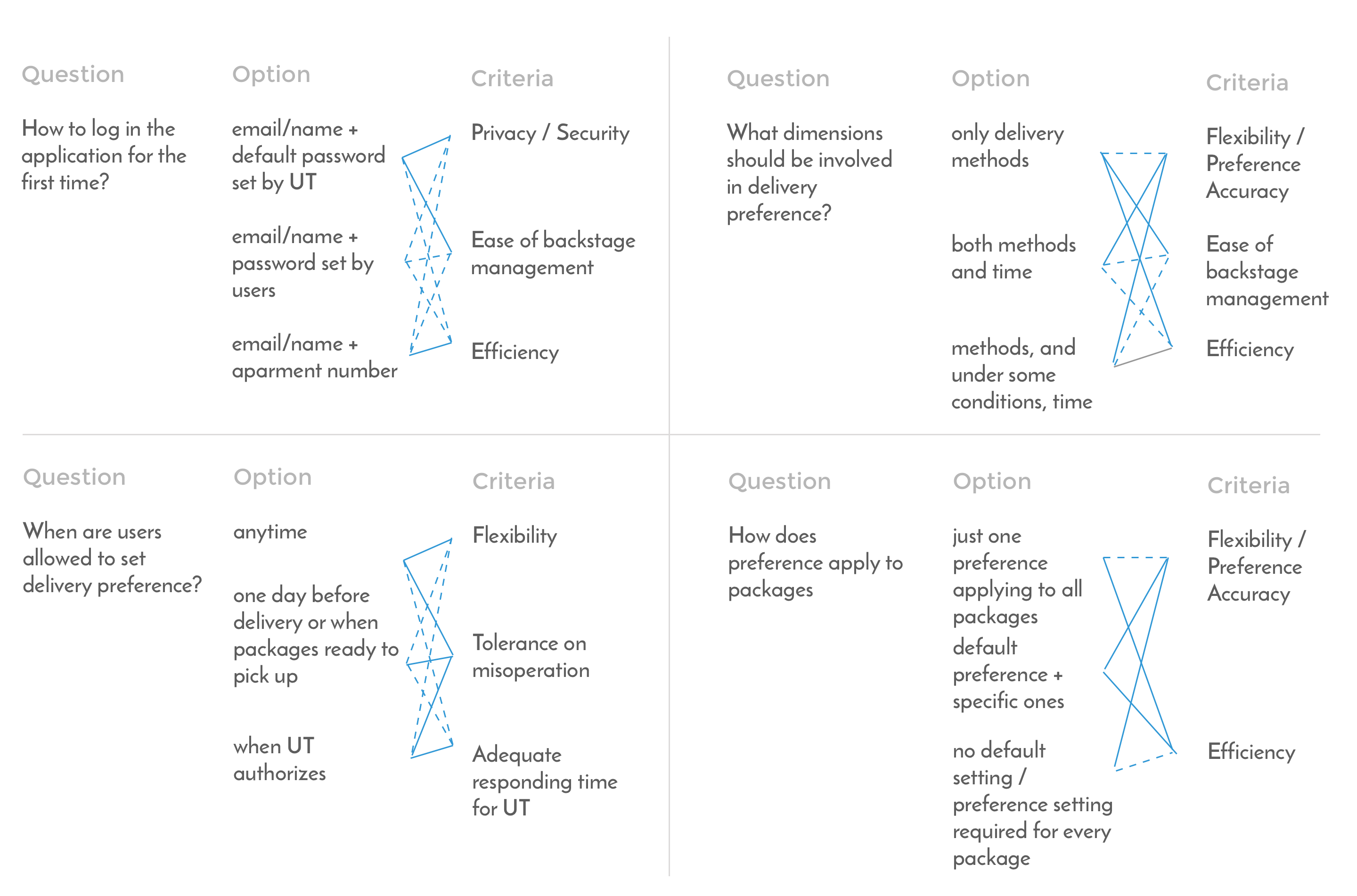
Among features above, setting community-based package delivery preference was the critical one customized for UT residents to maximize the user experience. To hone its usability, I came up with 3 approaches with different workflows to this feature and created QOC (questions, options, criteria) diagrams to make the final decision.
For instance, when considering what information should be used to log in the system, I firstly thought of using the name and the apartment number only, which was the most straightforward and effortless way without memorization of any extra information. In this case, however, account security could be a vital issue, since anyone knowing the name and apartment number could attempt to log in the system and made changes. Then I turned to the approach replacing the apartment number with the password set when the user signed up. Widely used as it is among mobile applications, this approach could trigger chaos in the package management when somehow there were multiple accounts signed up by the same resident and they had competing delivery preference. Putting aside the widely used option, I encountered another idea. Users would still use their name and password to log in. The only difference was that their accounts were and only could be signed up by the UT staff instead of themselves. They would get the default password when moving in and then reset it. This approach could avoid account duplication and guarantee information security as well.
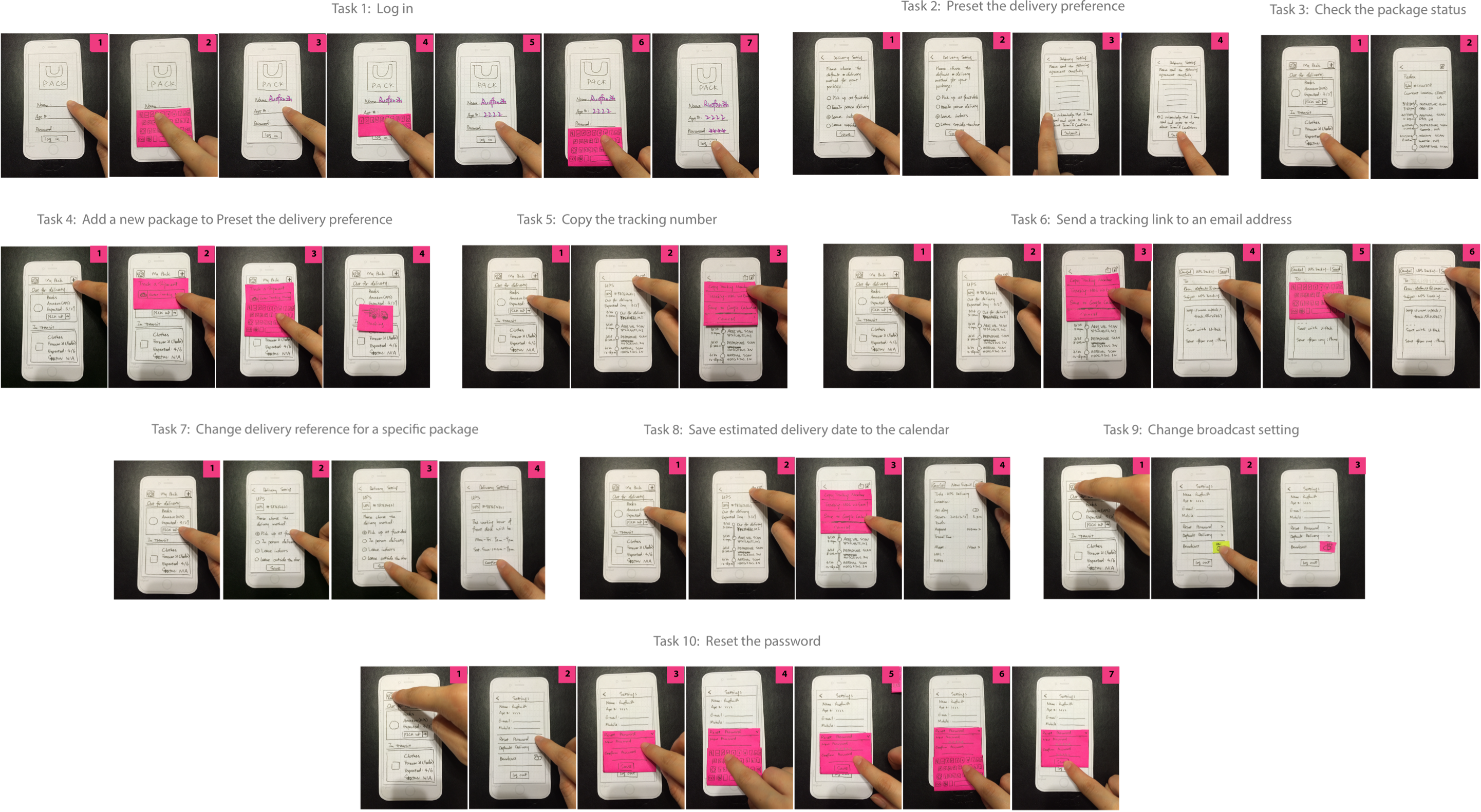
To enable rapid iterations at the early stage, I created a paper prototype and 10 tasks to test the core interactions with 5 classmates and 3 UT residents. Most of the participants indicated that interactions were intuitive and straightforward, while the only thing they would like to change is to make clickable areas more obvious.
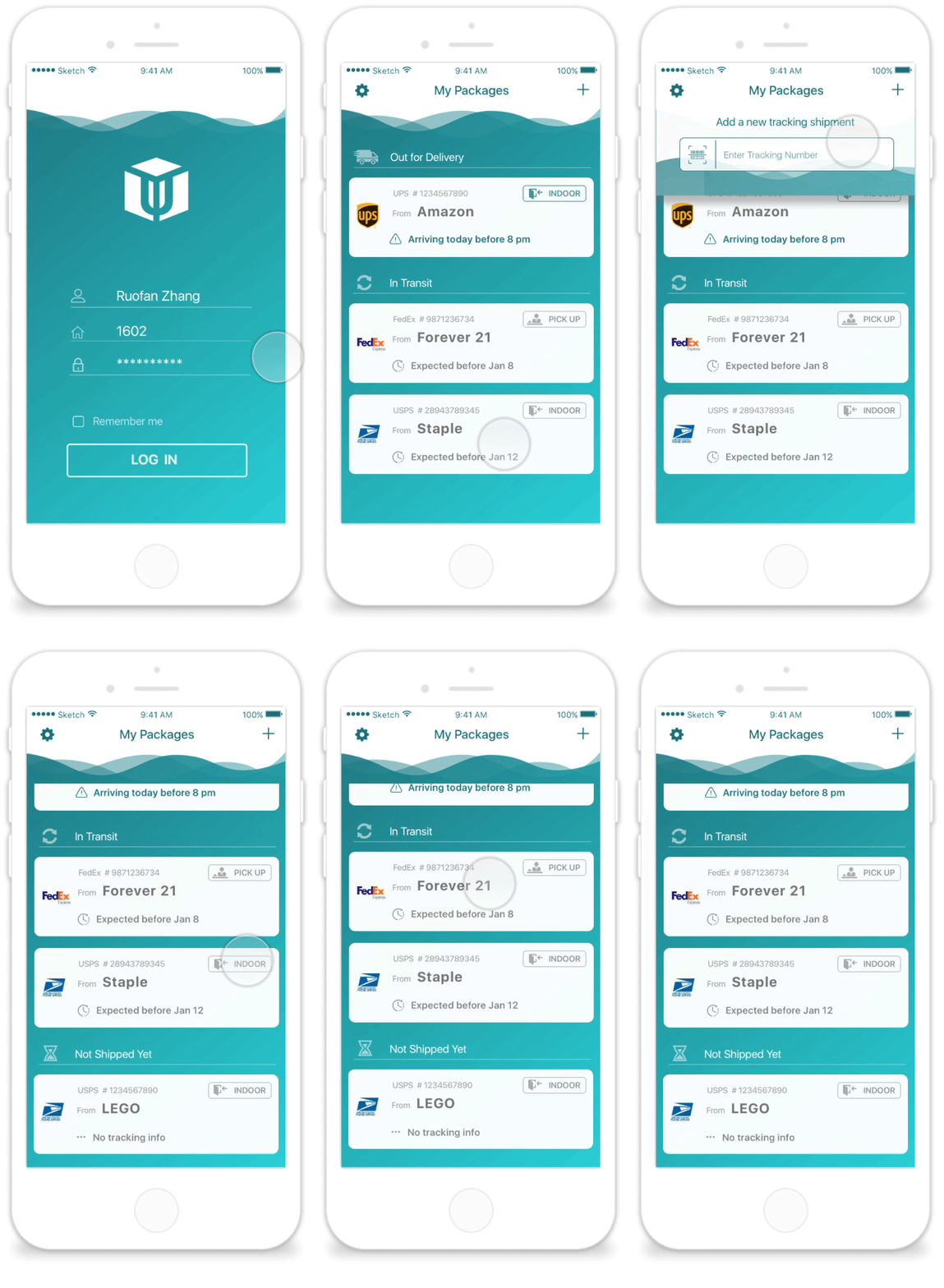
UNIFIED TRACKING PLATFORM
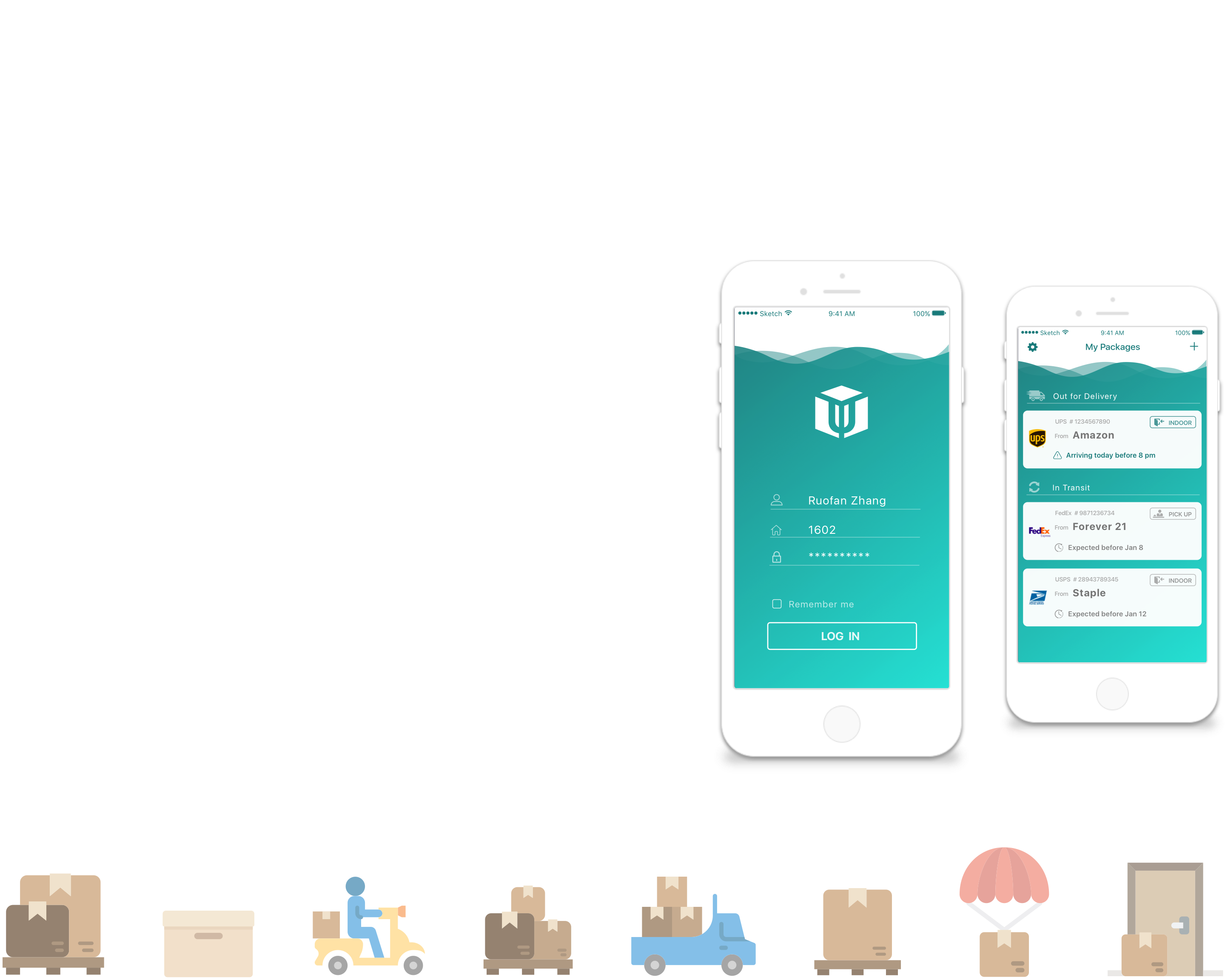
Packages carried by no matter which delivery service could be tracked at the same time. To track a new shipment, users can either scan the bar code or manually input the tracking number.
All packages are categorized into four groups according to their status: not shipped yet, in transit, out for delivery, and delivered.
instant notification
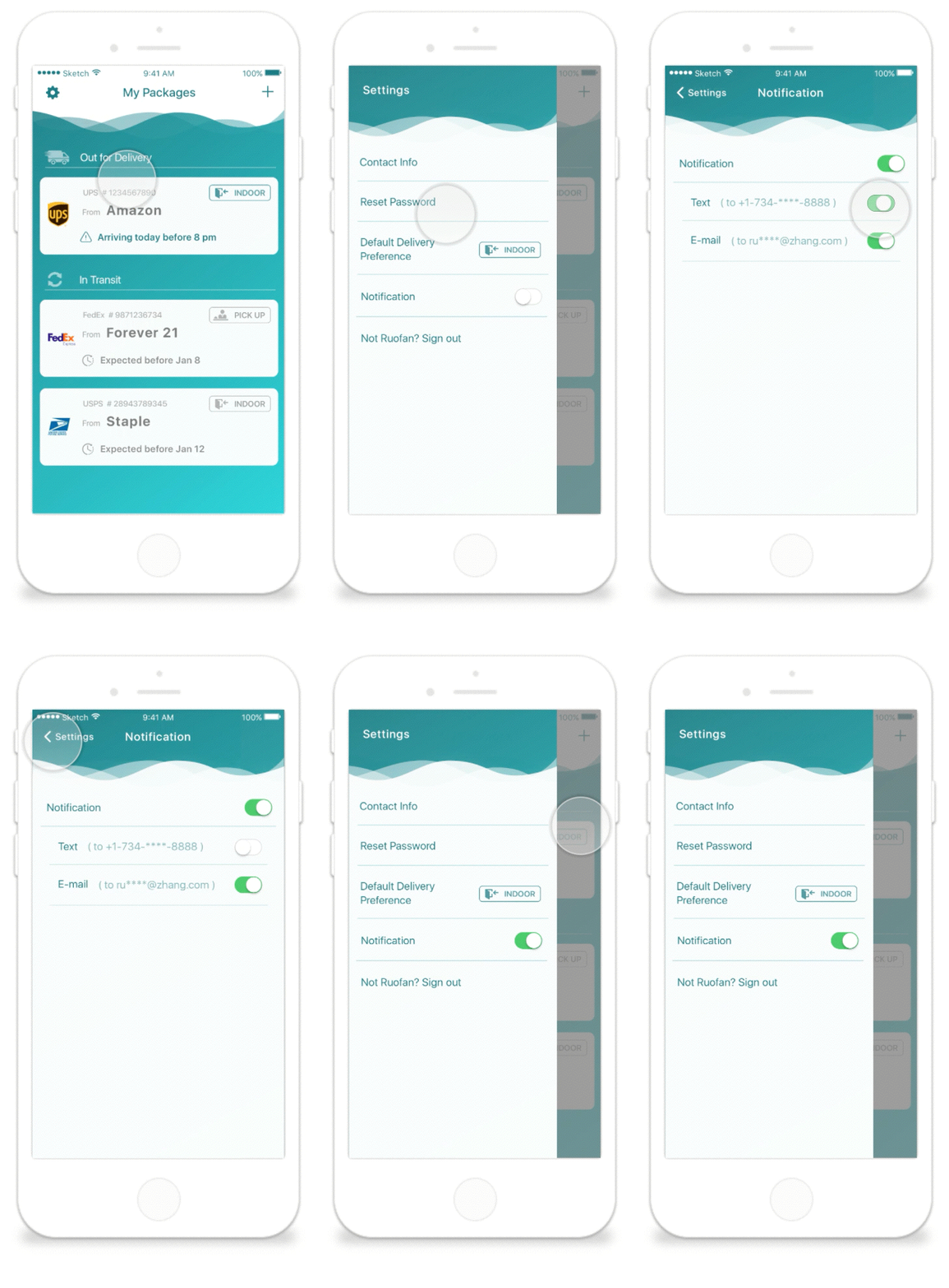
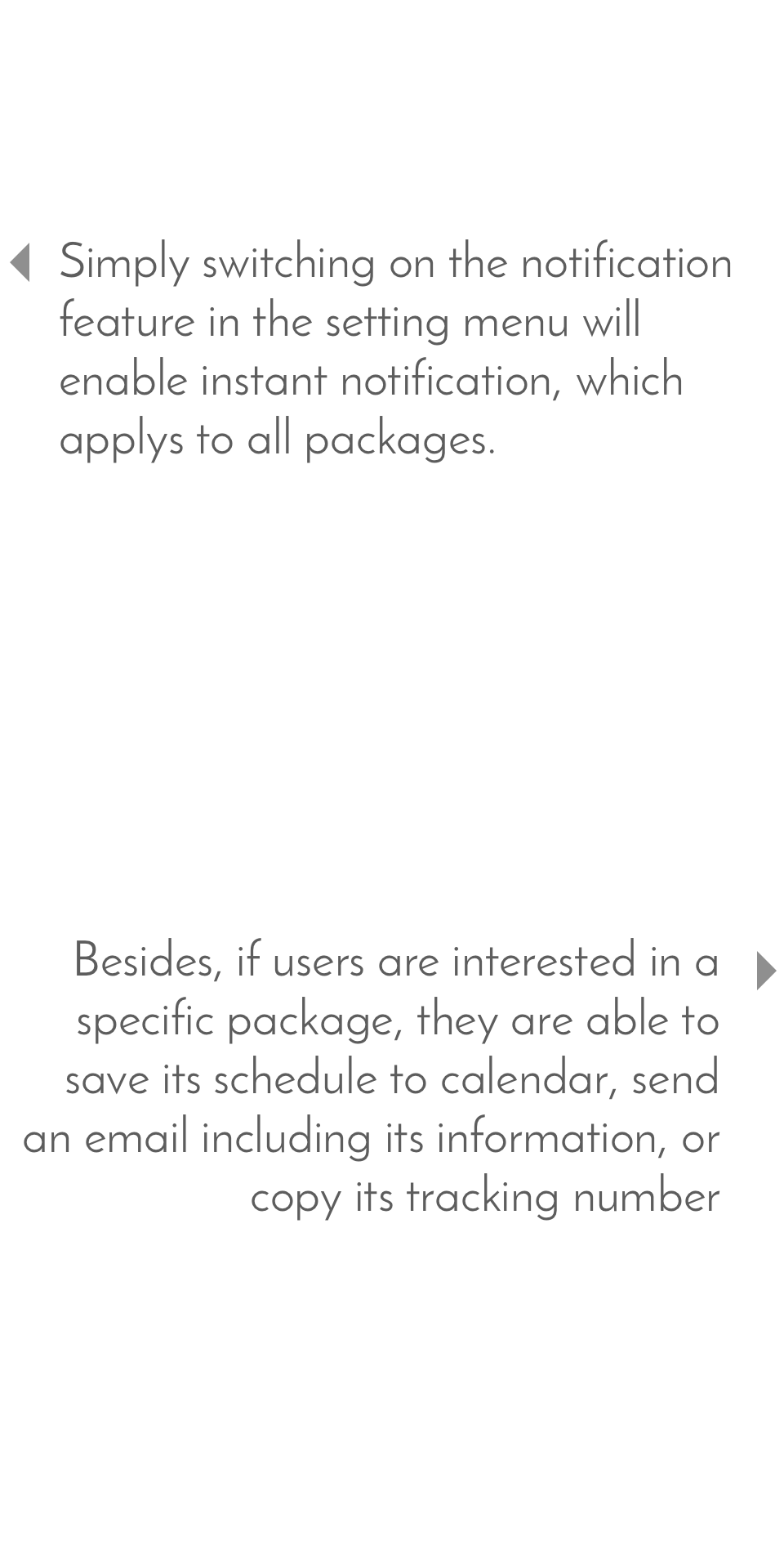
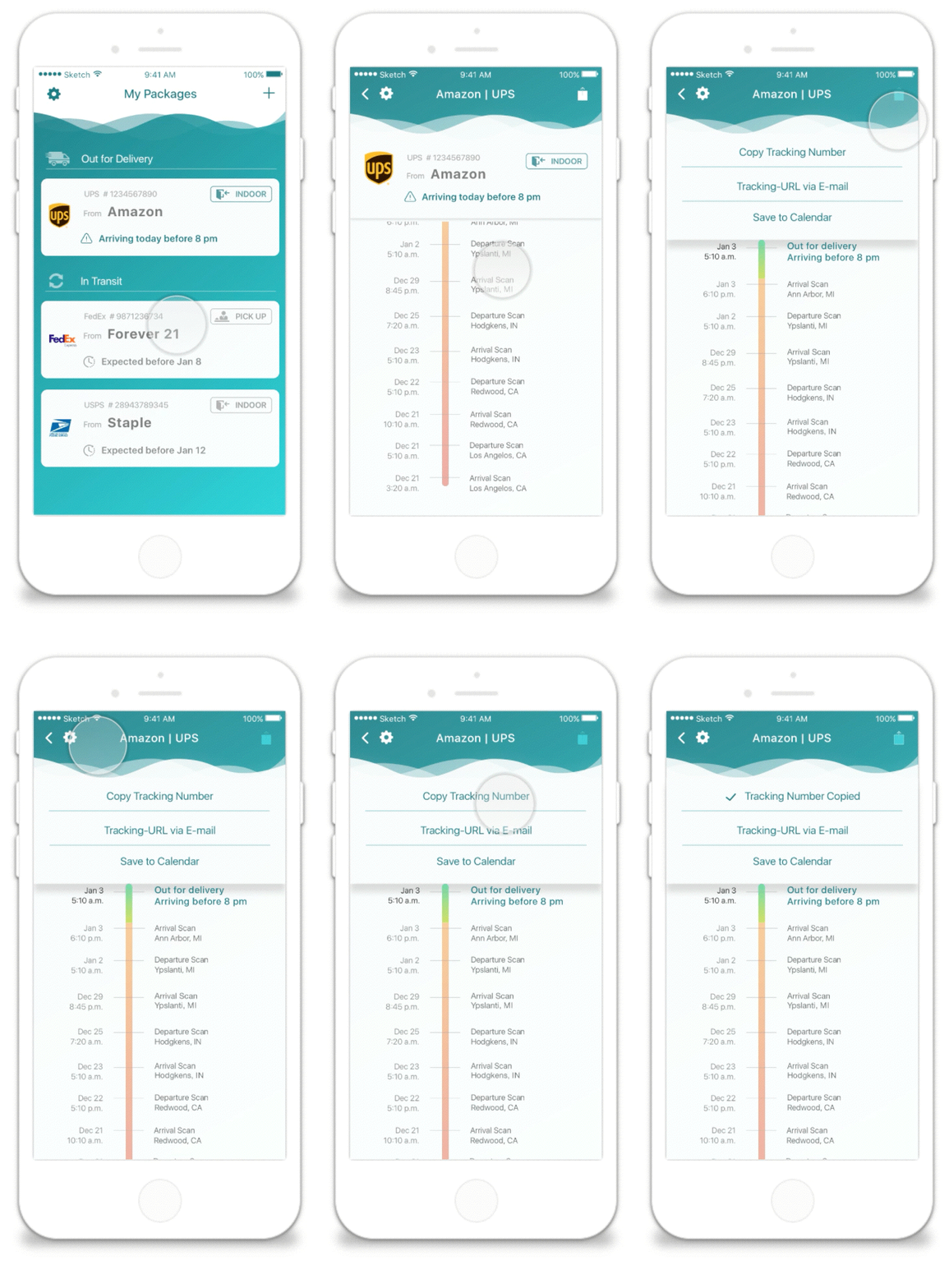
flexible delivery preference
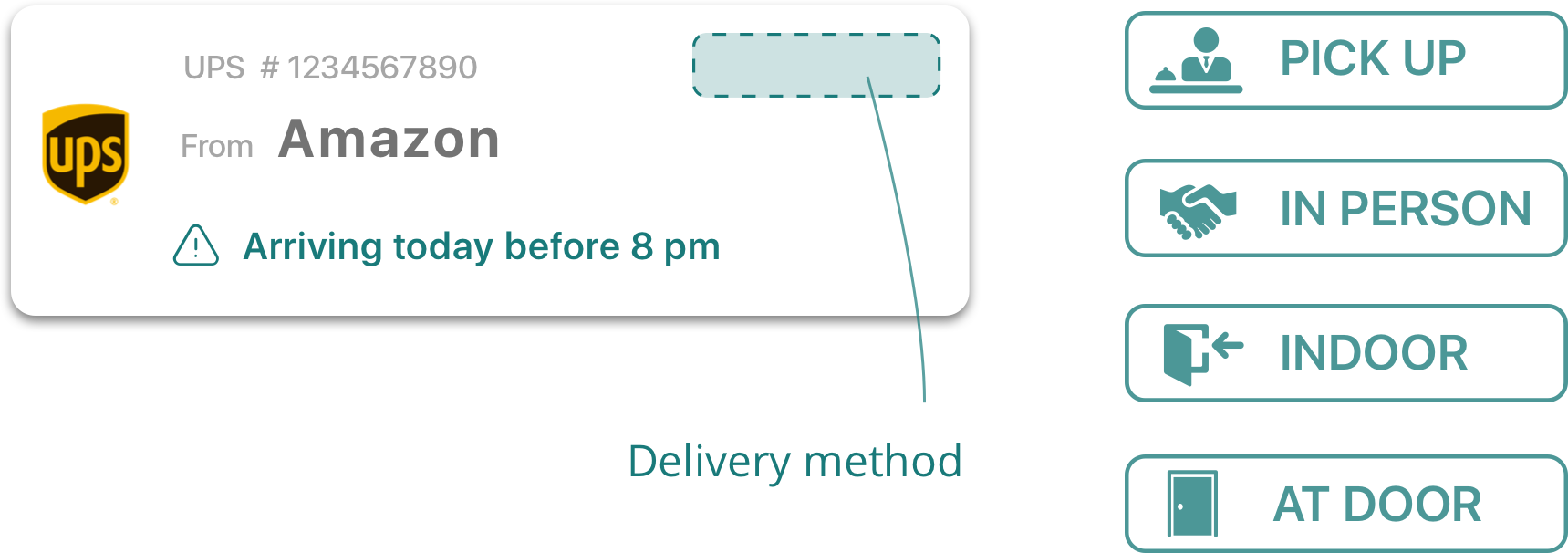
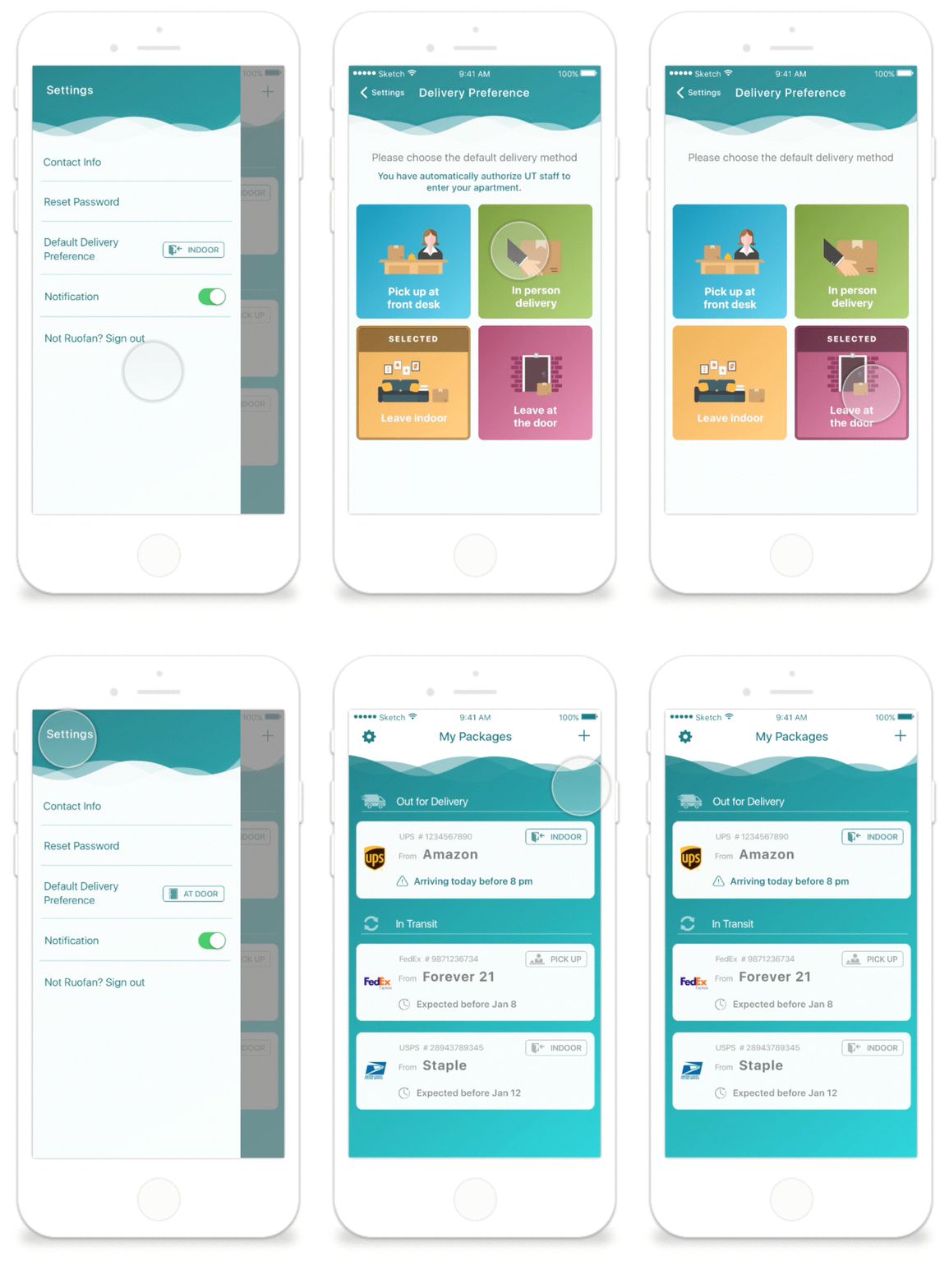
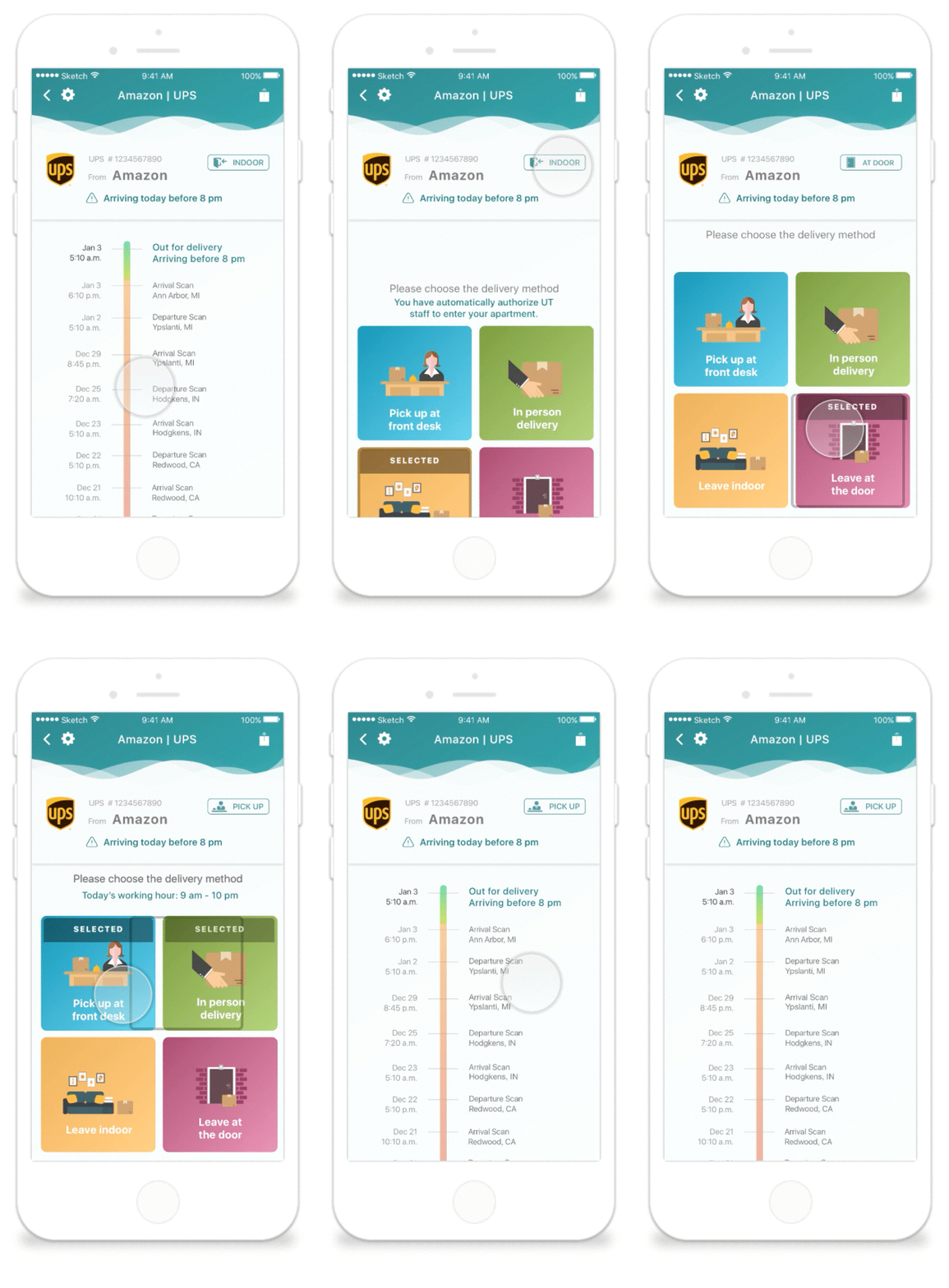
U-Pack provides four types of delivery methods: to pick up at the front desk, in person delivery, to leave packages indoor, and to leave them at the door.
U-Pack was a course-based individual project. It gave me exposure to a variety of design methods, such as QOC, scenario sketching, paper prototypes, and so on. By applying them to the real practice, I had a better understanding of abstract design philosophy like participatory design and behavioral design. Besides, as a resident of UT myself, I was quite confident about knowing the target user and framing the problem at the early stage. However, I neglected the importance of viewing the problem from UT staffs’ perspectives before it rose when I designed the login workflow. From this experience, I was keenly aware of the significance of involving different stakeholders during the design process.